Windermere
England's largest natural lake: 18 km of water from Ambleside to Lakeside, with cruises, the car ferry, islands and lakeshore houses.
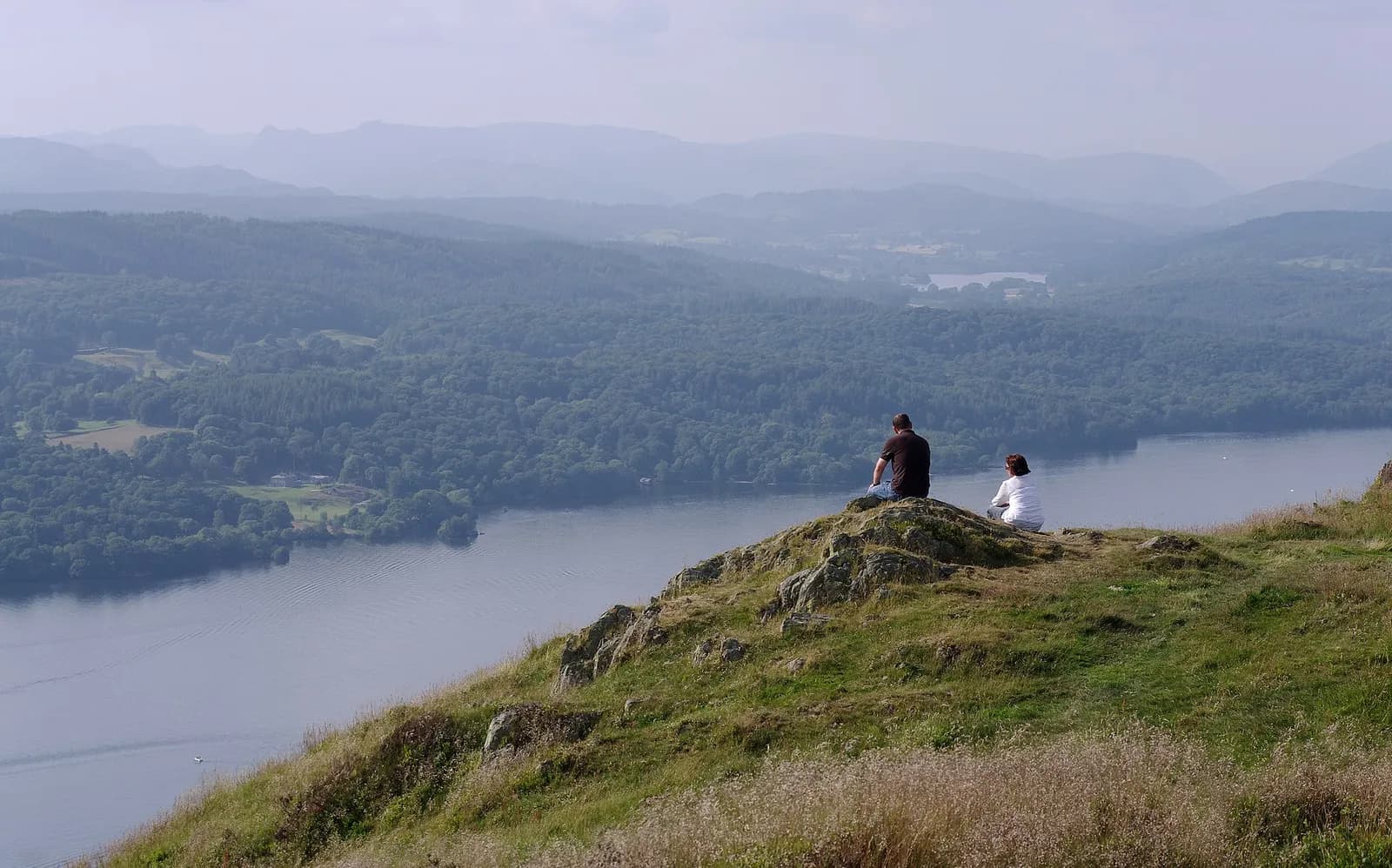
Windermere is the largest natural lake in England, a ribbon of water about 18 kilometres long running from Waterhead near Ambleside in the north to Lakeside and Newby Bridge in the south. Strictly speaking it is just Windermere, not Lake Windermere, as the mere already means lake. It has nineteen islands, the largest being Belle Isle opposite Bowness, and its shores are lined with Victorian villas, woods and boathouses.
This is the Lake District's working lake, and the busiest. Windermere Lake Cruises run all year between Ambleside, Bowness and Lakeside, where the steam trains of the Lakeside and Haverthwaite Railway connect, and there are smaller boats to Brockhole and Wray Castle. The Windermere ferry carries cars across the narrow middle from Ferry Nab to Far Sawrey. You can hire rowing boats, motor boats, kayaks and paddleboards from several places, and a 10 mph speed limit applies to powered craft.
The east shore is the busy side, with the A592 and A591, Bowness and Brockhole. The west shore is far quieter, with National Trust woods and paths from Wray Castle south past Claife Heights to the ferry, and a lakeside path that is one of the easiest walks in the Lakes. At the southern end, Fell Foot is a National Trust park on the shore with boat hire and picnic lawns.
On summer weekends Bowness Bay is extremely crowded and the roads around the lake are slow. Get on the water early, use the boats as transport, and explore the west shore if you want peace.