Guides · 21 October 2026
Easy family walks in the Lake District: our favourites under 3 miles
By Only Cumbria, updated 21 October 2026, 5 minute read
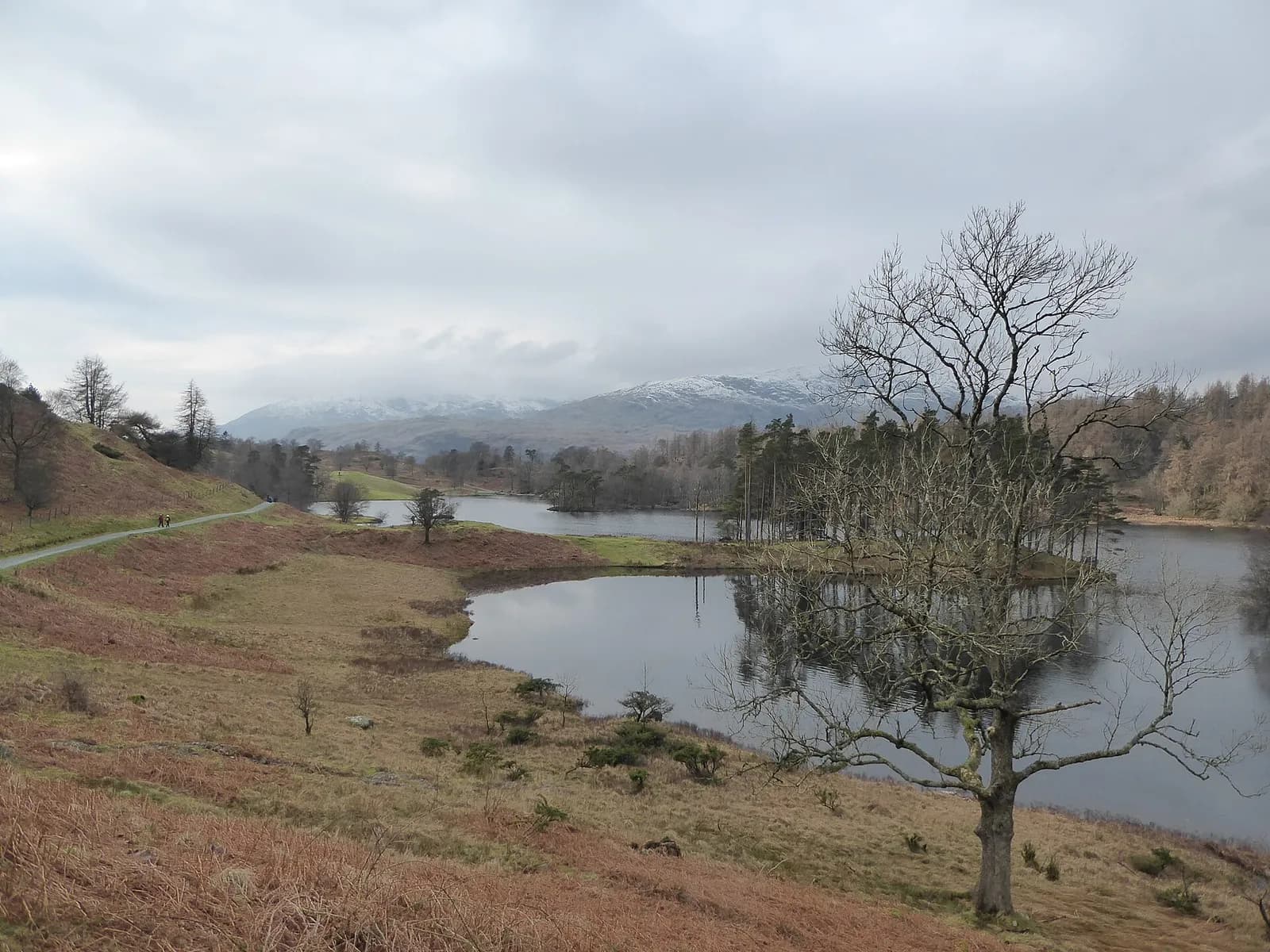
The Lake District is not only for people with ice axes. Some of its best moments are a few minutes from the car: a waterfall in a gorge, a tarn ringed by pines, a rocky knoll with the whole of Windermere below. These are the short walks we recommend to families, first-timers and anyone easing back into walking. Every one is on our walks pages with a mapped route, directions, parking and toilets.
The distances below are rounded from the routes we have mapped, so treat them as a guide. Small children turn a mile into an hour, which is entirely the point.
How we chose them
Each walk here is under 3 miles, has no serious climbing or exposure, and has a proper path. Several are Miles without Stiles routes, the National Park's scheme for paths without stiles, graded "for all", "for many", "for some" or "challenging" according to gradient and surface. A "for all" route should suit pushchairs, wheelchairs and mobility scooters. Grades are a guide, and paths change after storms, so check the route page before you set off. Our accessible guide has more.
Waterfalls
Aira Force, Ullswater. About a mile. The National Trust's waterfall drops just under 20 metres through a narrow gorge between two stone bridges, and the loop from the car park takes about an hour. It is the short walk with the biggest reward, especially after rain, but be clear-eyed about the terrain: many steep stone steps, unsuitable for most pushchairs, and drops above the gorge, so keep small children close. There is a tea room by the car park.
Elterwater to Skelwith Force. A little over 3 miles there and back, so a stretch, but almost flat. A Miles without Stiles route from Elterwater village along the beck, past the reedy shore of Elter Water with the Langdale Pikes behind, to a short, powerful fall where the river squeezes through a rock channel. The Britannia Inn in Elterwater and Chesters café at Skelwith Bridge make obvious bookends, and the 516 bus runs from Ambleside.
Tarns and lakeshores
Tarn Hows. Under 2 miles. A broad, well-surfaced path round the tarn between Coniston and Hawkshead, through larches and pines with the fells beyond. It is largely man-made, created by damming smaller tarns, and the National Trust describes the circuit as easy and accessible. It is no longer a full Miles without Stiles route, so expect a couple of short slopes. There are no toilets or cafés at the tarn.
Friar's Crag and the Derwentwater shore. About 2 miles there and back from Theatre by the Lake in Keswick, past the launch landings to the famous viewpoint, then along the shore and a boardwalk. Mostly level and step-free, though the last little drop to the crag itself is steep and narrow. Cafés and accessible toilets are at the start.
Loweswater and Holme Wood. About 2.5 miles there and back. A level track along the quiet south shore of Loweswater into oak woods, graded "for all". The car park at Maggie's Bridge holds only a handful of cars, so go early or have a back-up plan. The Kirkstile Inn is the nearest pub.
Talkin Tarn, near Brampton. About 1.5 miles. Outside the National Park but a gem for families in the north: a hard-surfaced, level path round a tarn in a country park, with a tearoom by the car park. Good for wheelchairs, buggies and dogs.
Want a longer lake walk? The Buttermere lake circuit is about 5.5 miles but mostly level, with a short rock tunnel children love. Treat it as a half day.
First summits
Nothing beats standing on a top. These have short climbs and big views.
Gummer's How above Windermere. Just over a mile there and back. Because the free Forestry England car park is already high on the hillside, it is only about 130 metres of climbing on a good path to a trig point looking up the whole length of Windermere. The ideal first fell. The car park is small; do not park on the narrow road.
Orrest Head from Windermere station. About 1.5 miles there and back. A steep lane, then a restored carriageway through woodland to a summit with benches and a view over the lake and the central fells. Alfred Wainwright climbed it on his first visit to the Lakes in 1930. It starts three minutes from the station, so it works without a car: Windermere is on the branch line from Oxenholme.
Dunmallard Hill, Pooley Bridge. Under 1.5 miles. A short loop up the wooded knoll at the foot of Ullswater, with the remains of an Iron Age fort on top. Steep and slippery in the wet, but over in an hour, and easy to pair with a steamer trip from Pooley Bridge. There is a level riverside path along the foot of the wood for anyone who would rather not climb.
History on foot
Kirkby Lonsdale, Devil's Bridge and Ruskin's View. About 1.5 miles. From the medieval Devil's Bridge into town, to Ruskin's View over the Lune, then down the 86 Radical Steps and back along the river. The steps are the only effort. The Lune is fast and deep below the bridge: no jumping, and no paddling there.
Ravenglass to the Roman bath house. About a mile there and back, level and graded "for all". The bath house walls stand almost four metres high and are free to visit in daylight. Combine it with the Ravenglass and Eskdale Railway, which leaves from beside the car park. There is no pavement on Walls Drive, so hold small hands.
Ready for a bit more?
Once a short walk feels easy, these are the natural next steps, each a proper little fell with a clear path:
- Latrigg from Keswick, about 3 miles with well-graded zigzags and one of the best views of Derwentwater.
- Hoad Hill above Ulverston, under 3 miles to the lighthouse-like Barrow Monument, with a very steep descent and a stile.
- Brant Fell from Bowness and Silver How from Grasmere, both short half days.
- Catbells, Keswick's favourite small fell, rocky near the top and best kept for a calm, dry day.
Tips for walking with children
- Pick a goal. A waterfall, a tarn, a trig point or a café works better than a distance.
- Go early. Car parks at Aira Force, Tarn Hows and Loweswater fill on fine days. See our parking guide.
- Dress for the Lakes, not the forecast. Waterproofs and a warm layer, even in summer, and proper footwear for the rockier walks.
- Water and edges. Several of these paths run beside deep water or above drops. Keep small children within reach.
- Dogs. Livestock graze many routes, so use a lead. Our dog-friendly guide has more.
- Bad weather plan. Aira Force is at its best after rain. For a full washout, see our rainy-day ideas.
For days out to go with these walks, see our Lake District with kids guide. Without a car, try the car-free guide.