Guides · 21 October 2026
Beatrix Potter country: Hill Top, Hawkshead and beyond
By Only Cumbria, updated 21 October 2026, 6 minute read
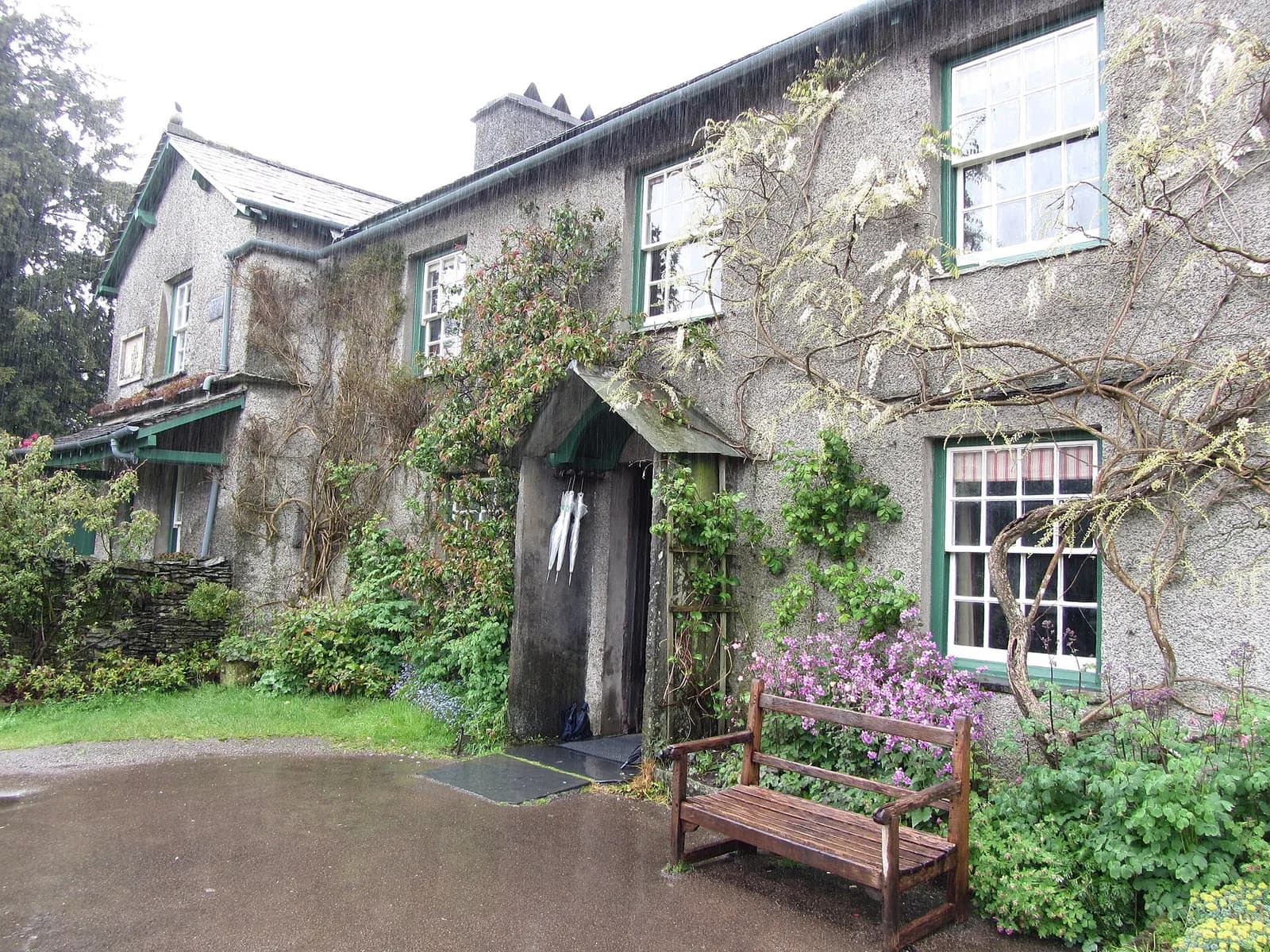
Beatrix Potter's Lake District is a small, specific patch of country. Most of it lies between the west shore of Windermere and Coniston Water: the twin villages of Near and Far Sawrey, the old market village of Hawkshead and the woods and tarns around them. Add Wray on Windermere, where her Lakeland story began, and Derwentwater near Keswick, where she drew Squirrel Nutkin, and you have the whole map. This is how we would see it, with the booking and transport details that trip people up.
A short life story, in places
Potter was born in London in 1866. Her family's summer holiday at Wray Castle on Windermere in 1882 began her long attachment to the Lakes, and it was there, aged 16, that she met Hardwicke Rawnsley, the local vicar who encouraged her drawing and later co-founded the National Trust.
In 1905 she bought Hill Top, a working farm in Near Sawrey, with income from her books and a small inheritance. In 1913 she married William Heelis, a Hawkshead solicitor, and the couple lived at Castle Cottage in Near Sawrey. She became a respected breeder of Herdwick sheep and, when she died in 1943, left more than 4,000 acres, sixteen farms and her flocks to the National Trust. Her will asked that Hill Top be shown as if she had just gone out.
Hill Top, Near Sawrey
Hill Top is a 17th-century farmhouse, now run by the National Trust. The house, farm and village turn up in several of her tales, including The Tale of Tom Kitten, The Tale of Jemima Puddle-Duck and The Tale of Samuel Whiskers, and the garden appears in the pictures for Tom Kitten. Inside, the rooms are kept much as she left them, which is why fans spend so long spotting objects from the illustrations.
The practical points matter more here than almost anywhere in the Lakes:
- Entry is by pre-booked timed ticket, for National Trust members as well as everyone else. The Trust releases slots up to two weeks ahead.
- Book parking too if you are driving. The car park is small and the lanes around it are narrow.
- The house closes for part of the winter. Opening days change through the year, so check the Trust's Hill Top page for the date you want rather than relying on any times quoted elsewhere, including ours.
A few doors away is the Tower Bank Arms, the village pub that appears in Jemima Puddle-Duck. It serves lunch on a first come, first served basis, asks you to book for dinner, has four rooms and welcomes well behaved dogs.
Moss Eccles Tarn and the Sawreys
The best way to feel the landscape of the books is on foot. The National Trust's Moss Eccles Tarn walk starts and ends in Near Sawrey and climbs gently up a stony track to a quiet tarn in the hills behind the village. The Trust puts it at about 2.5 miles, with some steep and muddy sections, and dogs on leads because of livestock. Potter spent time painting here while her husband fished, and the tarn was among the land she left to the Trust. Water lilies still fringe it in summer, and it is often said to have inspired The Tale of Mr. Jeremy Fisher, though that link is tradition rather than record.
Hawkshead
Hawkshead is about two miles north of Near Sawrey and deserves more than the quick look most Potter visitors give it. Its centre is largely traffic-free, a knot of whitewashed houses, yards and little squares, with pay car parking at the edge of the village.
The Heelis office. The 17th-century building on Main Street that was William Heelis's law office is believed to be where he and Potter first met. From 1988 to 2022 the National Trust ran it as the Beatrix Potter Gallery. The gallery has closed and the artwork has been removed, so ignore older guides that send you there to see original watercolours. Since August 2025 the building has been Tabitha Twitchit's Bookshop, a National Trust second-hand bookshop named after the cat in the tales. Opening days vary by season, so check before you make a special trip.
Monks, wool and a market. Hawkshead belonged to the monks of Furness Abbey, grew as a wool market in the Middle Ages and received its first market charter from James I in 1608. The monks' farmstead was Hawkshead Hall, a short way north of the village. Its gatehouse survives as the Courthouse, a Grade II* listed building probably of the 15th century, owned by the National Trust.
The Grammar School. Archbishop Edwin Sandys founded Hawkshead Grammar School in 1585, and it taught local boys until it closed in 1909. William Wordsworth was sent here after his mother died in 1778, and visitors can still see the desk where he carved his initials. The building is now an independent museum, open from spring to the start of November with days that change between term time and school holidays; see its own website for current hours and admission.
The church. Beside the school, St Michael and All Angels is a Grade I listed church, extended to roughly its present length around 1300, with wall paintings from the late 17th and early 18th centuries and the tomb of the Archbishop's parents in the Sandys chapel.
For food, drink and a bed nearby, see our Hawkshead page. The Drunken Duck Inn at Barngates is a few minutes' drive towards Ambleside, and Grizedale Forest is just to the south if the children need to run.
Tarn Hows
Tarn Hows, in the hills between Hawkshead and Coniston, is the most visited corner of Potter's estate. It is largely man-made: three small tarns were dammed into one by the Marshall family, who owned the Monk Coniston estate. When that estate came up for sale in 1930, Potter and Heelis bought the whole of it, and the National Trust raised the money to take on a large part. She managed that land for the Trust and left it the rest in her will.
Today the easy circuit round the water is one of the best short walks in the Lakes. Our route is here: Tarn Hows circular walk.
Wray and Windermere
Wray Castle, on the north-west shore of Windermere, is where the Potters spent that first Lakeland summer. The castle came to the National Trust in 1929. The building itself is closed in 2026 for a major refurbishment, but the grounds, café and car park are open, and the Trust says it plans to turn the castle into a gallery that will eventually house its Beatrix Potter collection. That would give her original artwork a home in the Lakes again, though no reopening date has been announced.
The nicest way to arrive is by water. Windermere Lake Cruises runs its Green Cruise between Waterhead at Ambleside, Wray and Brockhole, with the 2026 season running from late March to 1 November. Wray pier is about ten minutes' walk from the castle. See our guide to Lake District boat trips.
Over in Bowness, The World of Beatrix Potter on Crag Brow is the indoor option: a walk through the tales with the characters shown in 3D, a Peter Rabbit garden, a café and shops. It is open daily, has ramped access and is a good fallback for small children on a wet afternoon. Our rainy-day guide has more.
Derwentwater and Squirrel Nutkin
One correction to a common mistake: The Tale of Squirrel Nutkin is set on Derwentwater, not Windermere. Potter spent the summer of 1901 at Lingholm on the western shore, sketching squirrels and St Herbert's Island, which became Owl Island in the book. You can see the island from Friar's Crag, ten minutes' walk from Keswick: Friar's Crag and the Derwentwater shore. Mr McGregor's vegetable garden in Peter Rabbit was also painted at Lingholm.
Before you go
- Book Hill Top first and plan the rest of the day round your slot.
- The Windermere ferry links Ferry Nab, just south of Bowness, with Far Sawrey. It carries cars, bikes and foot passengers, takes about ten minutes and has no timetable or booking: you queue, and summer queues can be long. From the Far Sawrey side the road climbs through Far Sawrey to Near Sawrey.
- Without a car: in recent summers a seasonal bus has linked the ferry landing, Hill Top and Hawkshead as part of the Cross Lakes Experience. Check with the National Park whether it is running before you rely on it. Hawkshead itself is on the 505 bus. See our car-free guide.
- Parking: the Sawreys and Hawkshead are busy on fine summer days. See our parking guide.
- With children: our Lake District with kids guide has more ideas for the same area.